How to Identify and Choose Quality Stainless Steel Faucets: A Comprehensive Guide for Consumers and Industry Experts
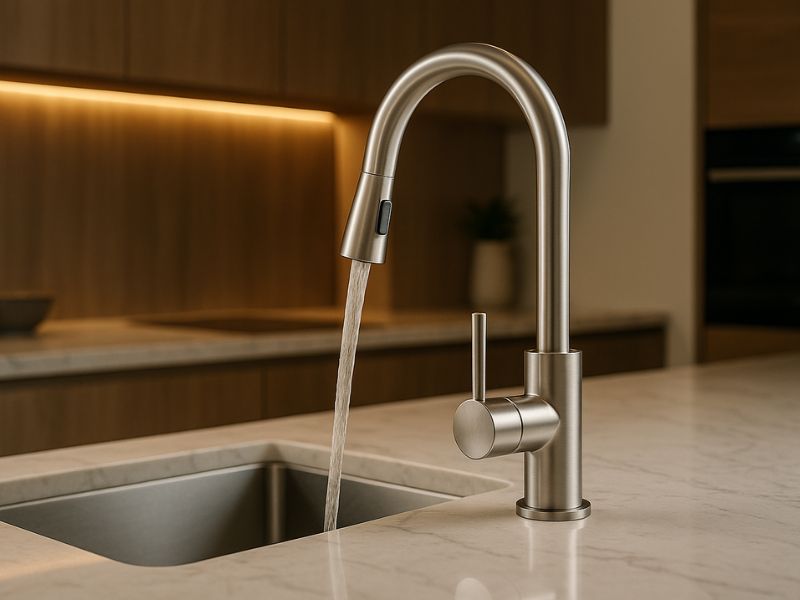
Faucets, as necessities in every home and commercial space, their material selection is not only related to appearance and durability but also directly affects our health and water safety. In recent years, stainless steel faucets have gradually become a popular choice in the market due to their unique advantages. But among so many products, how to distinguish the genuine from the fake and choose the right stainless steel faucet for you? As a sanitary ware industry expert with 28 years of experience, I will provide you with an in-depth analysis of stainless steel faucets from a consumer and industry perspective.
Last Updated: July 2025 | Estimated Reading Time: 12 minutes
This Article Will Help You Discover:
- What are the advantages and disadvantages of stainless steel faucets compared to traditional brass faucets?
- How to identify high-quality stainless steel faucets based on material grade, details, brand, and other factors?
- As a wholesaler and importer, how to seize the market opportunities for stainless steel faucets?
- What are the future development trends of stainless steel faucets?
- How to improve competitiveness through strategic procurement, product innovation, and differentiated marketing?
- [B2B Exclusive] Supply chain management, after-sales support, and quality control secrets.
I. Stainless Steel Faucets: Advantages and Features
Compared to traditional copper faucets, the biggest advantage of stainless steel faucets lies in the safety of the material.
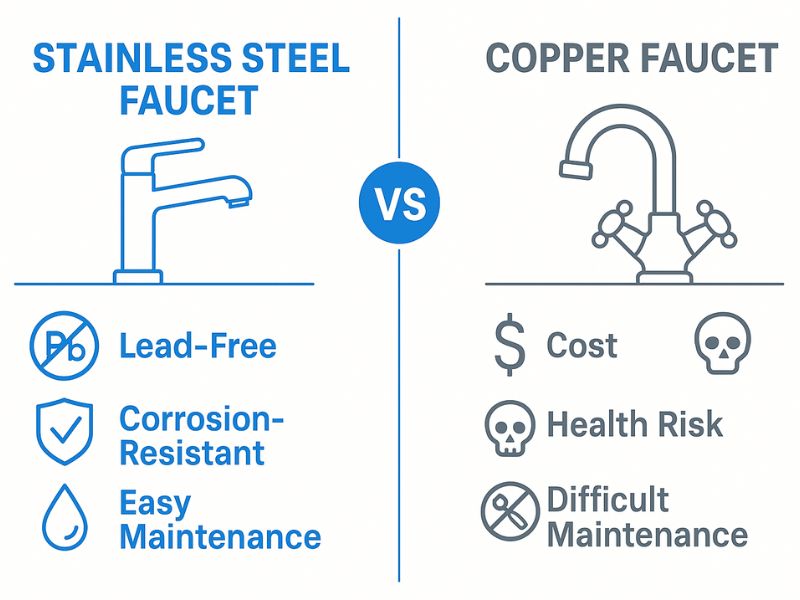
- Lead-Free and Harmless, a Healthy Choice: In the production process of copper faucets, a small amount of lead is usually added to improve processability. Long-term use may cause a small amount of lead to precipitate out, affecting human health. Stainless steel material is inherently free of harmful elements such as lead, arsenic, and iron, making it a healthier choice. Especially in regions such as the EU, which have strict requirements for drinking water standards, the demand for stainless steel faucets is growing. This also coincides with the development trend of food-grade stainless steel materials and medical stainless steel equipment. In the next few years, the EU will increase the impact of these metal elements on the human body, and stainless steel faucets in the sanitary ware industry are the preferred products for future development.
- Stable and Durable, High Cost Performance: Although the processing of stainless steel is more difficult, resulting in relatively simple styles of early stainless steel faucets and slightly higher production costs, with the advancement of technology, the styles of stainless steel faucets are also becoming more and more abundant. More importantly, in the face of rising copper prices, the price of stainless steel raw materials is relatively stable. In the long run, stainless steel faucets are more cost-effective. With the increasing depletion of raw material copper, copper may also be used as a national strategic resource in the future, restricting its use in the civilian industry, while stainless steel does not have this risk.
- Easy to Maintain, Durable and Beautiful: Stainless steel is not easy to rust, is corrosion-resistant, and is very simple to maintain daily. The brushed stainless steel surface only needs to be wiped briefly to keep it clean and bright, while the electroplated copper faucet surface is easy to fall off if it is not properly maintained, affecting the appearance.
- Diverse Surface Treatment, Versatile Style: Today's stainless steel faucets are not limited to brushed surfaces, but can also be subjected to various surface treatments such as electroplating, painting, and PVD, presenting various colors and textures to meet the needs of different home decoration styles. In particular, stainless steel brushed faucets with stainless steel sinks are natural and perfect.
II. End Consumers: How to Choose High-Quality Stainless Steel Faucets
As an end consumer, how can you choose a truly high-quality stainless steel faucet? Here are a few suggestions I have summarized based on years of experience:
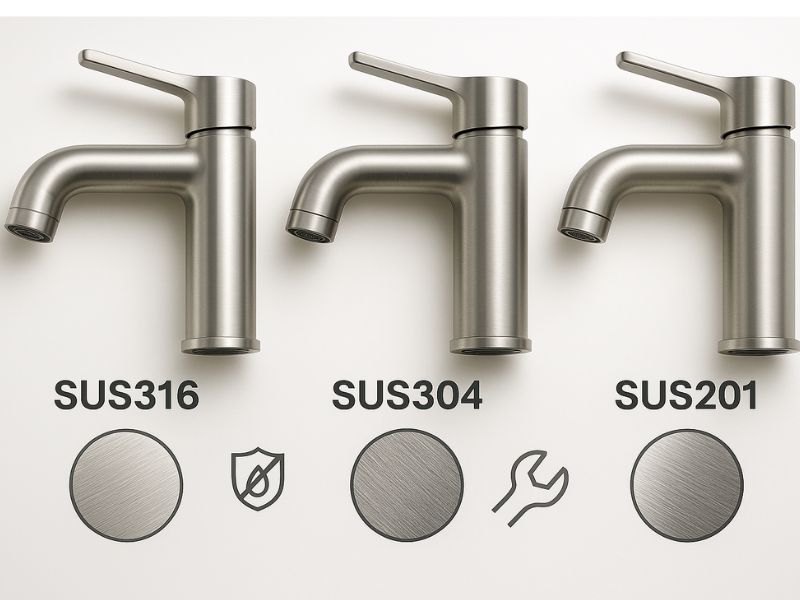
- tiIdenfy the Material Grade: The grade of stainless steel is mainly determined by its nickel content. Common ones are SUS316, SUS304, SUS201, etc.
- SUS316: It has extremely strong corrosion resistance and can remain stable even in strongly acidic and alkaline environments. It is also relatively expensive and is suitable for families or laboratories with extremely high requirements for water quality.
- SUS304: It is the most common stainless steel faucet material on the market. It has good comprehensive performance, moderate price, and can meet the needs of most families.
- SUS201: It has a low nickel content, relatively poor corrosion resistance, and is the cheapest. It is not recommended for long-term use. Generally speaking, choosing a stainless steel faucet of SUS304 or higher can ensure a good user experience and lifespan.
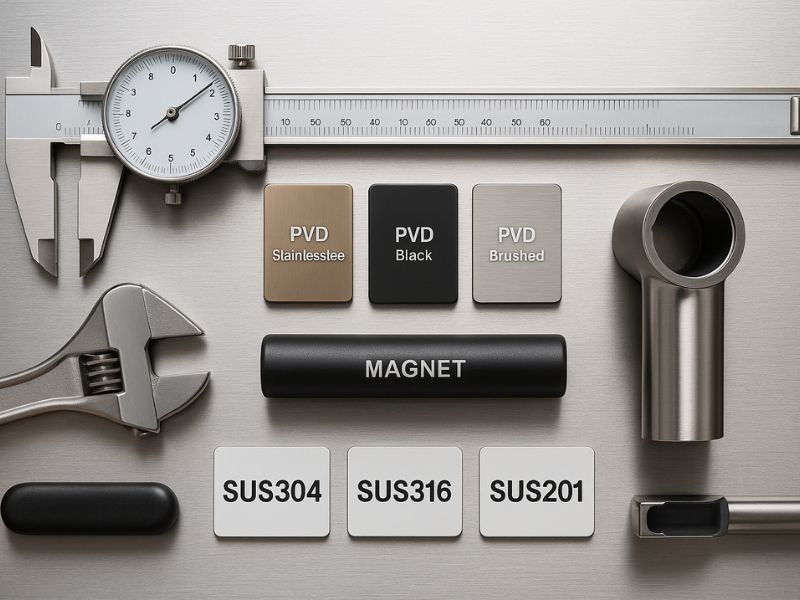
- Pay Attention to Product Details:
- Surface Treatment: Carefully observe whether the surface of the faucet is smooth and flat, and whether there are any scratches, pores, and other defects. High-quality stainless steel faucets have a fine surface treatment and feel comfortable.
- Welding Process: A good stainless steel faucet has smooth welding points without obvious welding scars.
- Accessories Quality: Check the quality of accessories such as valve cores and hoses, and choose well-known brands or reliable products to ensure the service life of the faucet.
- Choose Reputable Brands and Channels: Try to choose well-known brands or merchants with good reputations to purchase, and ask for regular invoices and warranty cards for future protection of your rights.
III. Wholesalers/Importers: Seize the Future of Stainless Steel Faucets
For wholesalers and importers in the sanitary ware industry, the rise of stainless steel faucets is both a challenge and an opportunity.
- Strategic Procurement to Reduce Costs: Compared with copper faucets, the production cost of stainless steel faucets is relatively high. However, by establishing long-term and stable cooperative relationships with high-quality suppliers in China (such as FaucetProducer.com) for strategic procurement, costs can be effectively reduced and profit margins can be increased. Focus on the supplier's quality control system, production capacity, and after-sales service.
- Product Innovation to Lead the Trend: With consumers paying increasing attention to health and environmental protection, the demand for stainless steel faucets will continue to grow. Wholesalers and importers should actively cooperate with manufacturers to carry out product innovation, develop more novel, functional, and market-demanded stainless steel faucets. At the same time, pay attention to low-flow, water-saving, and other environmentally friendly technologies to provide consumers with more sustainable product choices.
- Differentiated Marketing to Enhance Competitiveness: By emphasizing the health, environmental protection, and durability of stainless steel faucets, carry out differentiated marketing to attract more health-conscious consumers. At the same time, provide comprehensive after-sales service, solve consumers' worries, and enhance competitiveness.
- Pay Attention to Market Trends and Seize Opportunities: Pay close attention to the policies and regulations of various countries on drinking water standards, as well as changes in consumer demand for health products, adjust product strategies in a timely manner, and seize market opportunities.
IV. Prediction of Future Development Trends of Stainless Steel Faucets
Combining my years of industry experience and observations of market development trends, I am full of confidence in the future development of stainless steel faucets.
- Material Upgrade: With the advancement of technology and consumers' higher requirements for health, higher-grade stainless steel materials (such as SUS316L) will be more widely used.
- Diversification of Styles: Continuous breakthroughs in production technology will bring more novel stainless steel faucets, no longer limited to simple tube and cylindrical shapes, to meet consumers' needs for personalized design.
- Intelligent Application: Stainless steel faucets will be combined with smart home systems to achieve intelligent control, water quality monitoring, and other functions to enhance the user experience.
- Environmental Protection and Energy Saving: Low-flow, water-saving, and other environmentally friendly technologies will be more widely used. Stainless steel faucets will be more environmentally friendly and energy-saving, in line with the trend of sustainable development.
In short, stainless steel faucets will occupy an increasingly important position in the sanitary ware market with their unique advantages. Whether you are an end consumer or a wholesaler/importer, you should seize the opportunity and welcome the golden age of stainless steel faucets.
Table: Performance Comparison of Different Grades of Stainless Steel Faucets
| Grade |
Main Composition |
Corrosion Resistance |
Strength |
Price |
Applicable Scenarios |
| SUS316 |
18Cr-12Ni-2.5Mo |
Extremely Strong |
High |
High |
High-end homes, laboratories, special water environments |
| SUS304 |
18Cr-8Ni |
Good |
Medium |
Medium |
Most homes, commercial spaces |
| SUS201 |
17Cr-4.5Ni-0.8Mn |
Poor |
Lower |
Low |
Temporary use, low-end market |
Table: Advantages and Disadvantages of Stainless Steel Faucets
| Advantages |
Disadvantages |
| Lead-Free and Harmless |
Difficult to Process |
| Corrosion Resistant |
Relatively Simple Styles |
| Easy to Maintain |
Slightly Higher Initial Cost |
| Versatile Style |
Fewer Color Choices |
Table: Key Elements for Strategic Procurement of Stainless Steel Faucets
| Element |
Importance |
Remarks |
| Supplier Qualifications |
Extremely High |
Ensure Quality and Delivery Schedule |
| Quality Control System |
Extremely High |
Reduce After-Sales Risk |
| Production Capacity |
High |
Meet Bulk Purchase Needs |
| Price Competitiveness |
Medium |
Balance Quality and Cost |
| After-Sales Service |
High |
Resolve Potential Issues |
Recommended Internal Links:
- How to Identify the Authenticity of Faucet Materials
- Faucet Buying Guide: From Design to Function
- Maintenance and Care Tips for Stainless Steel Sanitary Ware
Recommended External Links:
- World Health Organization (WHO) Guidelines for Drinking-water Quality
- Wikipedia: Stainless Steel
- NSF International Certification


